Is that all there is?

“Is that all there is? Is that all there is? If that’s all there is, my friends, then let’s keep dancing. Let’s break out the booze and have a ball. If that’s all there is”.

Is that all there is for too many of us folks who have made it thus far into our 80th decade? Isolation? Boredom? Loneliness? Disconnect? Physical failures? And with no energy or opportunity to “have a ball”?

While the hours seem to drag on, the weeks seem to go by quickly. There are many hours when I sit in my recliner and let my mind go blank. I think about nothing, feel nothing. I am suspended in time and nothing matters. It is my ultimate respite.

I do perk up when I sit down to watch The View. I record it and and watch it while I eat lunch. The kind of women who animate The View are the kind of women who were a part of my close group of women friends when I lived in Albany (before I retired to take care of my mother who had severe dementia). Politically liberal, irreverent, savvy, and funny, we never ran out of things to talk about or experiences to share.

That is what I miss most. That connection to kindred spirits.

Over the years, I had tried, unsuccessfully to get one one of the local Senior Centers to start a women’s discussion group of some kind, in hopes of meeting new friends. It’s taken a while, but my local Center is planning to start what they are calling a “Gals Gossip Group,” and they are looking for someone to volunteer to facilitate it. I volunteered.

Of course, I probably won’t be able to drive for a while, and I might have to still use the walker, but the Center is only 5 minutes from the house, and my daughter said that she would drive me.

The other kind of discussion group I suggested (but was met with discomfort and rejection) what is called a “Death Cafe”.

At a Death Cafe people, often strangers, gather to eat cake, drink tea and discuss death. Our objective is ‘to increase awareness of death with a view to helping people make the most of their (finite) lives’. A Death Cafe is a group directed discussion of death with no agenda, objectives or themes. It is a discussion group rather than a grief support or counselling session.

The linked video about gives you an idea about why folks want to talk about death.

So, because I am still alive and kicking (well not kicking with the broken ankle), I am waiting for the delivery of a pair of shoes that I hope will accommodate the ankle brace I’m going to have to wear for a while when I get rid of the uncomfortable boot.

Meanwhile, anyone have any idea how I can have a ball? Or is that all there is?
The Exile of Age

We take comfort where we can —
the cuddle of a soft chair that rocks;
rich chocolate, ripe berries
on tongues hungry for savor;
a healer’s hands on aches holding
lost assurances of potency and privilege.

Age sucks from our days the granted
pleasures of the unknowing young,
whose dreams of hope and promise
bring fervor and spice to their days.

Instead, our days task us with
the release of expectations,
tbe realities of dispiriting limits,
leaving our nights to wrestle with
unexpected regrets and
pointless Escher dreams.

The Truth About Aging

My thoughts on the challenges of aging bubble up after having read two pieces on the subject: the book Turning: The Magic and Mystery of More Days, written by a woman in her early 60s, and an article in The New Yorker, “Why We Can’t Tell the Truth About Aging”.

The book Turnings is a well-written conversation about how to prepare to enjoy getting older. It’s a great book to use as a stimulus for discussion, since it offers engaging exercises to examine what aging might have to offer you. But it is written by someone who has not yet experienced the realities of being truly “old”.

The New Yorker article, however, confronts the realities of aging with disturbing but necessary forthrightness.

There is, of course, a chance that you may be happier at eighty than you were at twenty or forty, but you’re going to feel much worse. I know this because two recent books provide a sobering look at what happens to the human body as the years pile up. Elizabeth Blackburn and Elissa Epel’s “The Telomere Effect: Living Younger, Healthier, Longer” and Sue Armstrong’s “Borrowed Time: The Science of How and Why We Age” describe what is essentially a messy business.

The so-called epigenetic clock shows our DNA getting gummed up, age-related mitochondrial mutations reducing the cells’ ability to generate energy, and our immune system slowly growing less efficient. Bones weaken, eyes strain, hearts flag. Bladders empty too often, bowels not often enough, and toxic proteins build up in the brain to form the plaque and the spaghetti-like tangles that are associated with Alzheimer’s disease. Not surprisingly, sixty-eight per cent of Medicare beneficiaries today have multiple chronic conditions. Not a lot of grace, force, or fascination in that.

A contented old age probably depends on what we were like before we became old. Vain, self-centered people will likely find aging less tolerable than those who seek meaning in life by helping others. And those fortunate enough to have lived a full and productive life may exit without undue regret. But if you’re someone who—oh, for the sake of argument—is unpleasantly surprised that people in their forties or fifties give you a seat on the bus, or that your doctors are forty years younger than you are, you just might resent time’s insistent drumbeat. Sure, there’s life in the old boy yet, but certain restrictions apply. The body—tired, aching, shrinking—now quite often embarrasses us. Many older men have to pee right after they pee, and many older women pee whenever they sneeze. Pipher and company might simply say “Gesundheit” and urge us on. Life, they insist, doesn’t necessarily get worse after seventy or eighty. But it does, you know.

When Socrates declared that philosophy is the practice of dying, he was saying that thought itself is shaped by mortality, and it’s because our existence is limited that we’re able to think past those limits. Time has us in its grip, and so we devise stories of an afterlife in which we exist unshackled by days and years and the decay they represent. But where does that get us, beyond the vague suspicion that immortality—at least in the shape of the vengeful Yahweh or the spiteful Greek and Roman gods—is no guarantee of wisdom? Then again, if you’re the sort of person who sees the glass as one-eighth full rather than seven-eighths empty, you might not worry about such matters. Instead, you’ll greet each new day with gratitude, despite coughing up phlegm and tossing down a dozen pills.

The one way to prepare for the challenges of being old is to develop a sense of humor that can help take the edge off stark reality. Judith Viorst’s book Unexpectedly Eighty seems to do just that. I haven’t read it yet, but I plan to. As I prepare for another gastroenterology test, I could use a good laugh.

The struggle to be heard.

To be “heard” is to be visible, to be acknowledged as valued and appreciated.

Today is the 55th birthday of my incredibly articulate late-diagnosed autistic son.  Today he posted about marking the completion of his having to date traveled 32,120,000,000 miles around the sun.

His writing is thoughtful, moving, honest. But between his autism and what looks like is going to be diagnosed as a bad case of Chronic Fatigue Syndrome, the only place he can hope to be heard is over the internet. He really needs to write his autobiography, but that’s a challenge I don’t think he can find the “spoons” to master.
He  ends his post with this final poignant statement:

Thirty-two trillion miles is a long way to travel, and that doesn’t even include the miles accounted for by Earth’s rotation, let alone the rotation of our solar system around the galactic focus. That’s a lot of mileage I’ll be accruing even as my autistic and myalgic fatigue increasingly keeps me confined within a one-mile radius here in downtown St. Johns.

The passage of every mile, be it on foot or on orbit, subtracts a portion of life. I’ve already traveled a considerable portion of the way toward my death, and now I’m closing in on the reality that I mostly will move only as the planet carries me around the sun. So, then, maybe all of this is why I’m here, once again writing into the great and yawning abyss of the web: as my real geographies contract, perhaps I’m reaching—flailing, really—toward those ethereal, untouchable geographies.

For now, anyway. Until I quit on it again, or everything else up and quits on me. Which, at some point, it will, and must. As it will, and must,  for everyone.

So it goes.

Here we go again.

Happy Birthday, Bix. I wish I had the magic that could take away your pain –existential and otherwise.

I found MY “happy pill”!

I’ve been on antidepressants on and off during most of my adult life. They would keep from getting too negative, but they never really helped me feel much better.

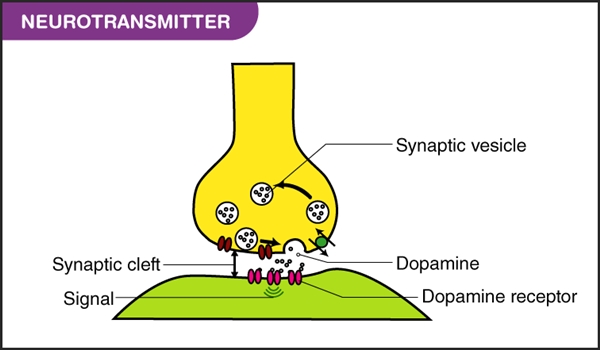
That’s because most prescribed antidepressants are “serotonin agonists”. Serotonin is one of the chemicals produced by the brain’s neurotransmitters that calms anxiety and keeps you from feeling negative and defeatist. A “serotonin agonist” is a substance that mimics the serotonin that your synapses are releasing to add to their effectiveness in instances when they have slowed down. (That is only a layperson’s simplistic description; I am not a doctor or scientist, but I’ve done a lot of reading about the process; a visual example is at the end of this post.)

It seems to me that, just as bodily functions cease to operate at maximum efficiency as we get older (and so we take statins and blood pressure meds etc.), the functions of the brain also slow down as we age. I posit that the lack of enough serotonin available to the aged brain can be the cause of so much of the depression we see in the elderly.

Now, not being depressed is not the same as feeling content and happy. I have discovered, for my purposes, that there is a pill for that.

One of the other chemicals produced by the brain’s neurotransmitters is dopamine, which plays a role in motivation and reward-seeking behavior. And that’s the happy pill: a “dopamine agonist” that helps the neurotransmitters and synapses create the dopamine necessary to have a positive effect on mood.

Now, why aren’t both serotonin agonists and dopamine agonists prescribed together? Actually, only recently, prescriptions like Abilify, which only partially deal with dopamine, are available. But they didn’t really work for me.

So now I take one serotonin agonist and one dopamine agonist.

And now I’m writing more, launched a national petition to improve senior housing,  just organized a Drum Circle at my senior center, and took on a project to write an interview of the author of Turning: The Magic and Mystery of More Days

As promised, here’s a visual of how neurotransmitters work, using dopamine as an example:


It might be me.

I’ve been searching to find out who might be the oldest continuing personal blogger in the U.S.  Not a blogger who hawks services or products or is any kind of influencer.  Rather, a female blogger who posts about her life and times.  My search has yielded no information. I have been blogging since 2001, starting at kalilily.blogspot.com.   Is there any woman out there older than I (84) doing the same thing?

Back in December of 2001, I blogged about why  I started to blog.  It’s worth reprising here:

So, there are some discussions going these days on about the purpose and value of weblogs. Oddly enough, the other night at my bi-monthly group meeting, I mentioned that I had begun a weblog, and I was asked to explain what that was and why I was doing it, and why I just wasn’t keeping a journal. As I’ve said, I’ve unsuccessfully tried keeping journals before and I write so much slower than I think that I got frustrated and quit. I can type almost as fast as I think (I got used to doing that at the job from which I retired last year, which involved mostly whipping out quick documents for others to share and claim as their own.) So, it’s easier to do it on the computer. And why don’t I just keep a journal on disk, I was asked. The truth is, I admitted, is that I’m used to writing for an audience. And I like having an audience. Even my poems are usually written with an audience (sometimes of one) in mind. It’s why I ballroom dance. I’m a performer at heart. I need ways to say to the world: this is who I am. Look at me. Pay attention. It seems to me that that’s at the heart of why everyone else who keeps a blog does so. In a world where we all have to live up to expectations and assume roles for survival purposes (our own and others) — caregiver, mother, employee, citizen — it’s so satisfying to have a place where one can BE who one is. Or in some cases, where one can BE who one wants to BE. It really doesn’t matter. We can create who we want to be or be creative with who we are. Either way, one has an identity, a voice. In a way, it’s kind of a new art form — or at least it can evolve in some cases into such. How cool is that!


While I’m Waiting

While I’m waiting for the signatures on the Improve Senior Housing petition to reach 100, I’m poking around in my old poetry. This from pre-Covid:

The Senior Center Singer

Hair white as winter,
face aligned with 91 years:

Seconds slow to match her
shambling gait secured
with sturdy black cane
and orthopedic shoes
as she moves to the mic
in the room’s easy silence.

As the soft piano tones,
her eyes glow like summer
mornings, bright and vital;
the plains of her face revive
as the clear soprano of her voice
reclaims the joys of Summertime,
recalls when living was easy
and babies hushed to the touch
of her melancholy lullaby.

A Movement Requires Public Visibililty

It’s not just a matter of writing your government representatives.  Everyone does that for every issue.  You need media attention and a way to get it. We seniors can’t get out and protest, like folks are doing for the environmental  movement; we need another way, and technology offers options.

One way is an online petition, and there is a free site to enable that.  Back in the day, when the Internet was threatened by government, my son and his cronies began a “Hands Off the Net” petition.  Ultimately, they printed out the thousands of names and hand delivered the pages of printout to the appropriate government official.

When we have enough signatures to start, we can see if we can get our local television stations to publicize what we are trying to do. Speaking at senior centers and giving them an onsite chance to sign the petition is another way of generating support.

If you can share the idea with other bloggers, or even share my posts, that could help as well.

To begin an online petition, we need a catchy phrase, like “Survival Isn’t Enough: Better Housing for Seniors.  I’m open to suggestions.

I have joined the online petition site and will start providing the information that it requires.

Again, I’m open to suggestions.  I hope that you will give this some thought.  If we start now, we will be ready when Harris begins her tenure.


The Face of Pain

My mother had passed away at age 94, after a decade of increasing dementia.

         While  Words Fail  
She was gone before she went,
slipping into that final forgetting
with each hollow breath.

I was her angel, she said
as she sat at the sunny table
picking at pancakes and coffee
while she still could smile
and think meaning.

Music kept her eyes alive
awhile, her feet remembering
thoughtless, but certain of rhythms
too deliberate to disappear.
She followed my familiar lead,
reaching for memories lost
with the fading of voice.

She didn’t believe in demons,
but I saw them slip inside her skin,
forcing pain from her pores,
folding her face in caverns
of anguish and alarm,
as, steadily, words fled, leaving
a frightened keening in their wake.

She was gone before she went,
and when she went, the world
filled again with words.

(elf 2020)

Leaping into Elderhood

The only podcast to which I listen is “Wait, Wait, Don’t Tell Me” on NPR.  It makes me laugh, and I always learn some little known, but intriguing facts.

For example, I just learned that a recent study shows that we do not age slowly; rather we age in leaps.  The first leap is at age 44; the second at 60.  They need to add one more leap and that’s at 80.

When I reached 80, my knees went and I had to have one replaced.  The other is still iffy.  Then my hips and back started aching and now I have an appointment at the pain management office because my lumbar spine is in constant pain. Of course, the “where the hell did I put my phone” syndrome is right on target as well.

Theoretically, the next leap would be at 100.  If I last that long, it will be very short leap to “can someone please adjust my pillows?” and “Please up the morphine.”