“sleep that knits up the ravell’d sleave of care”

Macbeth is talking about the importance of sleep. He describes sleep as something that “knits up the ravell’d sleave of care,” meaning it repairs the tangled threads of worry and stress from the day. He calls sleep “the death of each day’s life,” implying that sleep ends the day’s troubles. He also calls it “sore labour’s bath,” meaning it refreshes the body after hard work, and “balm of hurt minds,” meaning it heals troubled thoughts. Finally, he calls sleep “great nature’s second course” and “chief nourisher in life’s feast,” emphasizing that sleep is essential for life and health.

A decade ago, I posted about the issues I was having with sleep. I have had really bad insomnia since the fall of 2014. I’ve tried just about everything available — prescriptions, OTC, herbal concoctions, TENS stimulation, exercise, meditation, visual imagery. Some worked for a while then stopped and some never worked at all.

My final solution back then was to pay the $200 for a Medical Marijuana card, and I chronicled my adventurous “Medical Marijuana Mystery Tour” here.

These days I take a combination of sleep aids, including this tart cherry formula and this hemp-derived sleep gummie. They work, but they are not cheap and they are only available online — for now.

While there has been a government ban on selling and shipping products with more than.3% THC online, creative hemp growers figured out how to extract THC components — as Delta 8 and Delta 9 — from the hemp plant (in contrast to its cousin, the blatantly psychoactive marijuana plant) that bypass the government ruling.

Well, all of that is going to change in November, when the government outlaws selling and shipping Delta-9 or Delta-8. That will put me at a disadvantage because I will have to renew my Medical Marijuana authorization card (for $200) and will have to go to the dispensary to get what I need — and they don’t always have what I need. So, in the meanwhile, I am stockpiling the gummies I get online in anticipation of the November legislative ban on my sleep aids,

I know that many elders struggle with sleep issues, but I’m sure that there are very few who have the opportunity to experiment with marijuana.
I found MY “happy pill”!

I’ve been on antidepressants on and off during most of my adult life. They would keep from getting too negative, but they never really helped me feel much better.

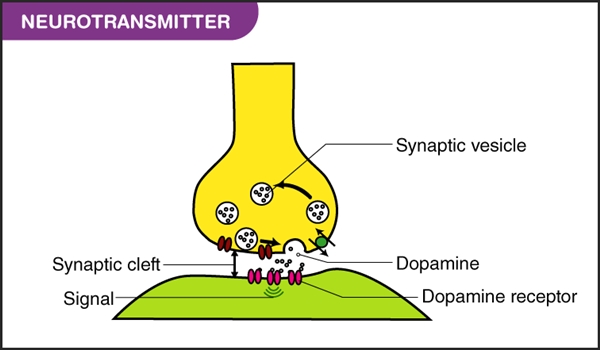
That’s because most prescribed antidepressants are “serotonin agonists”. Serotonin is one of the chemicals produced by the brain’s neurotransmitters that calms anxiety and keeps you from feeling negative and defeatist. A “serotonin agonist” is a substance that mimics the serotonin that your synapses are releasing to add to their effectiveness in instances when they have slowed down. (That is only a layperson’s simplistic description; I am not a doctor or scientist, but I’ve done a lot of reading about the process; a visual example is at the end of this post.)

It seems to me that, just as bodily functions cease to operate at maximum efficiency as we get older (and so we take statins and blood pressure meds etc.), the functions of the brain also slow down as we age. I posit that the lack of enough serotonin available to the aged brain can be the cause of so much of the depression we see in the elderly.

Now, not being depressed is not the same as feeling content and happy. I have discovered, for my purposes, that there is a pill for that.

One of the other chemicals produced by the brain’s neurotransmitters is dopamine, which plays a role in motivation and reward-seeking behavior. And that’s the happy pill: a “dopamine agonist” that helps the neurotransmitters and synapses create the dopamine necessary to have a positive effect on mood.

Now, why aren’t both serotonin agonists and dopamine agonists prescribed together? Actually, only recently, prescriptions like Abilify, which only partially deal with dopamine, are available. But they didn’t really work for me.

So now I take one serotonin agonist and one dopamine agonist.

And now I’m writing more, launched a national petition to improve senior housing,  just organized a Drum Circle at my senior center, and took on a project to write an interview of the author of Turning: The Magic and Mystery of More Days

As promised, here’s a visual of how neurotransmitters work, using dopamine as an example: