1 atggatgtca atccgactct acttttccta

1 atggatgtca atccgactct acttttccta aaaattccag cgcaaaatgc cataagcacc
61 acattccctt atactggaga tcctccatac agccatggaa caggaacagg atacaccatg
121 gacacagtaa acagaacaca ccaatactca gaaaagggaa agtggacgac aaacacagag
181 actggtgcac cccagctcaa cccgattgat ggaccactac ctgaggataa tgaaccaagt
241 gggtatgcac aaacagactg tgttctagag gctatggctt tccttgaaga atcccaccca
301 ggaatatttg agaattcatg ccttgaaaca atggaagttg ttcaacaaac aagggtagat
361 aaactaactc aaggtcgcca gacttatgat tggacattaa acagaaatca accggcagca
421 actgcattgg ccaacaccat agaagtcttc agatcgaatg gcctaacagc taatgagtca
481 ggaaggctaa tagatttctt aaaggatgta atggaatcaa tgaacaaaga ggaaatagag
541 ataacaa ccc actttcaaag aaaaaggaga gtaagagaca acatgaccaa gaagatggtc

No, neither I nor my keyboard has gone completely haywire.

The above are the first lines of the results of geneticists’ efforts to sequence the genes of the swine flu (renamed H1N1).

I don’t understand any of that scientific mumbo jumbo. I also don’t understand why (from Harper’s Weekly):

Egypt, which has no cases of the flu, ordered all its pigs killed, especially slum pigs; police at Manshiyat Nasr slum fired tear gas and rubber bullets at rioting Coptic Christian pig farmers.

Well, I guess I do understand why. I just think it’s stupid.

Some sciences might be awfully hard for lots of people to understand, but, I swear, even more often, I find it hard to understand the people who don’t understand.

I watch my home-schooled grandson as he moves each day toward understanding more. While he already knows “where babies come from,” my daughter has been waiting for him to ask how they got there. And he finally did, the other day.

Using videos on the web and available books designed to help children understand the process of conception, gestation, and birth, my daughter is helping her son to begin to grasp the complexity of it all.

While I am unswervingly Pro Choice, I also understand the awesomeness of fetal development. And that’s why I don’t understand why those who oppose abortion don’t make a big deal of disseminating information about how babies come to be and how “sacred” (see 5th definition here) and amazing the actual, factual process is. I wonder, if young children were instilled with awe while explained the facts, would they be more likely, as teenagers, to avoid unwanted pregnancies — not out of fear of some god, but rather because they would value life more. Maybe it shouldn’t be called “sex education.” Maybe it should be called something more scientific, like “human procreation.”

C’mon, even Sarah Palin’s daughter admits that abstinence doesn’t work. She certainly has learned that from her own experience.

Knowledge and understanding can sidetrack many bad decisions, and “knowing” and “understanding” are not the same thing. If children truly were helped to understand the scientific marvel that they are as human organisms — right from the very beginning — perhaps as they mature, they would have more respect for themselves and for other living things. And then, maybe, abortions wouldn’t be necessary except in extreme cases.

Of course, I’m just speculating. What do I know? I’m just a little ol’ grandma raising hell at the keyboard and trying to understand this world that seems to be “going to hell in a handbasket.” (Hmm. Why a handbasket, I wonder.)

Some extreme things that are happening I understand and accept, some I understand but despise, and some I just don’t understand. All of the above are reflected in the following, again lifted from Harper’s Weekly Review:

Sweden recognized same-sex marriages.

A food-service industry survey found that schoolchildren would like to replace lunch ladies with robots.

Kenyan women’s organizations called for wives to boycott sex, and for prostitutes to be paid not to work, until leaders in the coalition government stop feuding.

South Korea bioengineered four fluorescent beagles

A senior Buddhist monk in Thailand named Phra Maha Wudhijaya Vajiramedhi vowed to teach gay and transgender Thai monks better manners, which would include the elimination of their pink purses, their sculpted eyebrows, and their revealingly tight robes.

Officials in New Delhi were investigating the case of Shanno Khan, an 11-year-old girl whose teacher allegedly forced her to stand in the hot sun for two hours as a punishment for not doing her homework, ignoring Khan when she promised to learn her alphabet and begged for water. The girl fainted and was hospitalized. “I never want to go to school again,” she told her mother, and died a day later.
GERD and the Munchies

Nope. It’s not the name of a new alternative rock group. It’s the two related problems that have been plaguing me for years. I always seem to be hungry, and the food cravings are especially bad before I go to bed. The result is acid reflux and accompanying insomnia.

I’ve tried all sorts of pills — for the reflux, for the munchies, for insomnia. I’m still on a proton pump inhibitor, which helps with the acid reflux except when I have the nighttime munchies.

After exhaustive Googling, I finally found something that seems to curb my appetite and stop the acid reflux.

I tastes a lot like alka seltzer, except that alka seltzer contains aspirin and citric acid, as well as bicarbonate of soda. It’s the acid and the bicarb that combine to make the fizz. But both the aspirin and citric acid in the alka seltzer are not really good for anyone with stomach problems.

My remedy fizzes also, but the acid component is mostly acetic acid.

Apple cider vinegar and bicarbonate of soda (also known as baking soda), added to water and drunk twice a day work for me.

There are some ads on the net for books that will tell you how to use three ordinary kitchen items to heal GERD. I haven’t read any of those books (refuse to spend the money), but my bet is those books add some honey to the basic apple cider and vinegar concoction.

Apple cider vinegar and honey mixed together have been considered a “tonic” for generations, thought to help everything from arthritis to weight loss.

I don’t mind the taste even without the honey, but I think I’ll try adding that third ingredient to my mixture and see if it works any better.

Meanwhile, I’m successfully cutting down on my late evening snacking — which means my acid doesn’t reflux, and I sleep a lot better. And it’s cheaper — and healthier — than popping pills.

ways of aging

We are each a combination of nature and nurture, but it does seems as though how we look and feel as we get older is a lot more dependent on “nature” — on the genes we inherited that keep our bones strong, our brains sharp, and our skin not too badly wrinkled.

How we take care of ourselves, of course, can make a difference. How we view ourselves or want others to view us also can make a difference.

A link in a comment left on Ronni Bennett’s post on The Appearance of Age got me thinking about how I have chosen to appear as I age.

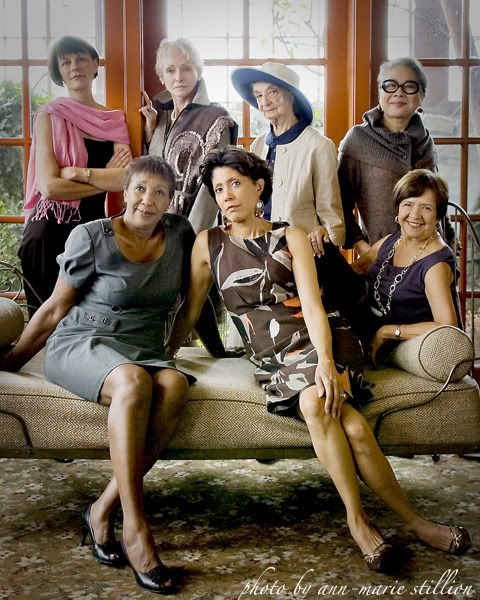
The link takes you to this photo of a group of women over 50 who aspire to be models.

They all have enhanced their natural looks to give themselves a uniquely attractive aesthetic. My way of dealing with my aging face and body is to make a similar (although not as successful) effort. I still love clothes and shoes, I still get my hair cut by a professional, and I still wear makeup and style my hair if I’m going to be out in public. The way I look has always been important to me, and apparently I’m not changing in that way even as I approach the age of 70.

Ronni, on the other hand, has taken a more relaxed and less expensive approach. Her identity and self-image require less vanity than mine, and I envy her for that.

A cousin of mine sent me a link to the video, below, which gives a hearty glimpse of 88 year old Hazel McCallion, mayor of Mississauga, Ontario (a city without debt) for the past 31 years. Watching this video sure made me wish that I had had the brains and heart and courage to age as she has.

“Hurricane Hazel,” as she is affectionately known, still gets on the ice and pushes a hockey puck around. In the video, she gets to fulfill one of her dreams — to make a music video.

Now, that’s aging with style.

the satisfaction of seeds, sprouting

The morning glories are up first, pushing both ways out of the little peat pots sheltered in the tiny green house. I think I see glimpses of other struggling seeds, including something called “Dream Herb” — seeds I must have acquired a while ago, forgetting why or when. I just want to see what the plant will looks like when fully grown.

I’m growing other oddities as well, like the mini tomato pod plant. I cant even find the site where I bought it now, but, from what I remember, there are little sweet tomatoes that grow inside pods. Ah, it will be very cool to see what the plant actually becomes.

There is something so very satisfying watching the daily emergence of the seeds — more satisfying even then noticing that the hostas and lilies that were dug up last fall and thrown against the back cement wall of the house (where nothing ever grew) have rooted and are thriving. Some things refuse to die. Others struggle and survive.

I sit in the dappled shade and mull over these mundane yet satisfying processes. Perhaps I, too, am sprouting roots.

the cat came back

He scooted out the door one day. It took him more than two weeks to get hungry enough to walk into the trap. And for those two weeks the family kept vigil.

Cuddles is just what his name says — soft and cuddly and affectionate. My grandson chose him at the pound several years ago; Cuddles is his cat.

For two weeks food was left out for him (the raccoons and possums and other cats had a feast). Two humane traps were set. Two outdoor cameras were set to catch any possible sight of Cuddles.

And every night Cuddles showed up on the cameras, but he was too smart to go near the traps. Until he got hungry enough.

He’s home now, much leaner and very tired. My daughter got all the matted fur out of his long black hair. My son-in-law checked him for ticks and removed several. My daughter have him a flea and tick bath and repellent. He looks half the size of what he was. His green eyes are tired.

Cuddles is home. The back door now sports a spring hinge. All’s right with the world here in the valley.

slowing down

I saw a snippet on tv news the other day about a group of Londoners who are holding a “Slow Down London” festival to encourage the people of the fastest paced city in the world to slow down.

As I napped on and off all day today, I realized just how tired I am after several years of always having to be ready to take care of my mother’s needs. That meant that if I wanted to do anything for myself, I had to do it in a hurry. I was always either hurrying to finish what I was doing or hurrying to do what she needed me to do. I’m just beginning to realize what a toll it took on my energy.

From the “Art of Slow Living:”

To stay for all your life a free thinker: this is the meaning of Slow living; to have the courage to stop, ponder and made your own choices before external events and trends will sweep you away.

I am at a place in my life at which I should be able to do that. I am surprised by how hard it’s being for me to downshift.

I think it’s going to take a lot of naps.

Joss Whedon:
a man who rights women

Actually, he “writes” women. And he writes them the right way — multi-faceted females who serve as role models for all genders. They are not perfect, but they struggle to do the right thing. They love and they war. They are strong and they are vulnerable and they make mistakes. And they’re smart. And they care.

Joss Whedon (whose new “Dollhouse” series has its female characters pushing even more boundaries than ever) is not a name I knew, even as I got wholeheartedly, back in the late 1990s, into the tv series “Buffy the Vampire Slayer.”

Granted, at age 69, I’m not considered part of the demographics that would be drawn to teenage Buffy, but let’s face it: superlatively creative writing, clever humor, and a complex and spunky heroine should be appealing to all ages (at least those of all ages who still appreciate irreverent spunk and and still have some imaginative curiosity).

After Buffy, there was the short-lived and unique Firefly television series (and subsequent off-shoot movie, Serenity), which boasted several totally different female characters whose escapades explored just about every facet of the most compelling female archetypes. Oh, don’t get me wrong — the male characters were just as compelling, and I still have fantasies about Nathan Fillion (who is currently starring in the series Castle).

And that’s when I started noticing the name of Joss Whedon, writer, who is young enough to be my son and whose mother sure brought him up right. The more I learned about him, the more I liked him. I like him for what he writes and for how he thinks.

On April 11, he received the 2009 Lifetime Achievement Award in Cultural Humanism, addressing a crowd a Harvard with his customary honesty and humor. Watch this and you’ll be a Whedon fan too.

Whedon’s new series “Dollhouse” has not generated the audience that his fans hoped, and so, learning from the fate of the too-late-acclaimed “Firefly,” some of those fans are touting a WATCH DOLLHOUSE WEEK, beginning on Monday the 27th, to generate interest in having the series come back next season.

I’ve watched every episode of “Dollhouse” thus far, but I’m going to re-watch it all next week, recognizing that there are probably all sorts of subtle and quirky bits I probably missed the first time. There are always more to Whedon’s stories and diaglogues than it first seems.

In many ways, “Dollhouse” is framed differently from his other series, and this site provides a good analysis. Most important, I think, is the following paragraph from that piece.

One of Whedon’s perennial concerns is masculinity in a feminist era: if women are so powerful now, how are guys supposed to relate to them? It’s a good question, and one of the better themes a male writer can explore, if he’s willing to do it honestly. Whedon has offered solutions before but they’ve always been imperfect, because they haven’t addressed how pervasive gender inequality is, and how much we’re all complicit in it, how our thoughts and perceptions are informed by it from Day 1 simply because it is the context in which we live. In Dollhouse, he’s giving it deeper and more sustained focus than ever, and is more willing than ever to implicate masculinity: in parallel to the story of how the dolls work to reclaim their personhood, there’s the story of the people who take it away from them on a day-to-day basis, and how they justify their actions.

The idea of the “Dollhouse” has stirred some controversy among viewers and critics. For me, that’s even more reason to watch it.

Join me for Watch Dollhouse Week. You’re never to old to be a fan of a creative spirit like Joss Whedon.

the promise of better health care

A friend of mind sent me an email that he got from a doctor friend of his that had these things to say about Obama’s health care agenda:

Those who serve in medical careers are also planning early retirements rather than go through the possibilities of the “change”. One friend’s doctor told him that if/when this is in place, the medical building he works in will be empty… that they will just get out of the health care business. There is no such thing as a free lunch!

Most of you know by now that the Senate version (at least) of the “stimulus” bill includes provisions for extensive rationing of health care for senior citizens. The author of this part of the bill, former senator and tax evader, Tom Daschle was credited today by Bloomberg with the following statement.

Bloomberg: “Daschle says health-care reform “will not be pain free.” Seniors should be more accepting of the conditions that come with age instead of treating them.”

It seems to me that that the elements of the legislation cited by the Bloomberg piece are open to interpretations a lot different from the ones suggested.

It is understandable (but not forgivable) that too many of today’s doctors who who have become used to their high incomes as a result of their successes in the current health care industry object to Obama’s plans to reform that industry.

I found one really good website that clearly explains how Obama’s proposals can clean up the mess we’re in and set up a system that focuses on the needs of the consumer. That’s us, right? The consumers of health care.

These are snippets of what the health care page on the Deloitte site has to say:

In recent history, health care reform efforts have fallen short as a result of two forces: The economics of the status quo make change an uphill battle for reformers and end users – consumers – have not demanded major changes

The issue of health care reform is not about bad people; it is about a flawed system in which the results reflect perfectly the incentives upon which it is built. Health care reform is about systemic change. It is not about a single program that benefits one stakeholder at the expense of others. It cuts across every sector, every role and, indeed, every household

We believe that four interdependent areas of focus provide a solid foundation for systemic reform. The pyramid (See Figure 2: The Health Care Reform Pyramid) reflects the essential relationships among these areas. Taken together, over a 10 year period, the result is a $530 billion reduction in spending while improving quality.

Figure 2
Figure 2

I am lucky to have found an excellent doctor who is interested in addressing how all of my physical complaints combine to affect my health. The goal is to get an accurate assessment of my health problems, to prevent any of the situations from getting any worse, and to avoid surgery and hospital stays. Her care of me is covered under Medicare, as my care under other doctors has been. But she is more thorough and thoughtful. We need a lot more doctors like her, who already are operating in the new “change” mode. We don’t need doctors like the kind quoted above, who threaten to retire rather than adapt.

The Deloitte Center for Health Solutions, part of Deloitte LLP, delivers research on and develops solutions to some of our nation’s most pressing health care and public health related challenges. Learn more about the Center.

If you’re interested, the Center will hold a live webcast on May 27. You have to register, but registration is free.

Topic: More than $140 billion of the $787 billion American Recovery and Reinvestment Act was targeted to health care projects. And beyond the stimulus package, the White House Office of House Reform has been working on key legislative and regulatory changes destined to reshape the health industry landscape for years to come. We’ll discuss:

* The status of these investments and how monies have been deployed.
* What’s ahead in terms of health care reform?
* Key legislative and regulatory changes.
* Recent activities within key House and Senate Committees.

Deloitte also includes several centers that explore other crucial issues such as the environment and technology. Those of interested in corporate and government use of technology for information management might like to take a look at its Center for Network Innovation.

As for me, I just want to feel better, and I believe that Obama’s health care agenda will support my continuing to work at that.

.

the journey of a thousand miles begins with a single “Ow!”

bilateral facet hypertrophic degenerative change
bilateral paravertebral disc osteophyte complex
bilateral neural foraminal stenosis
marked central spinal stenosis
bilateral subarticular recess compromise
flattening of the interior thecal sac
multilevel disc bulging and spondylosis
multilevel facet arthrosis and disc herniations

That’s what my recent spinal MRI showed. It’s not going to kill me, but it sure gives me some pain and concern. Some of it’s simply a result of aging. But some might have been prevented.

So, how come all of my former doctors who saw X-rays of my spine only told me that I had bone spurs on my spinal discs and that was nothing to worry about. How come not one of them thought to send me for an MRI to get a better sense of what was going on.

Well, my new excellent doctor, who also sat down and went over all of the details with me, took that extra diagnostic step. The next step for me is to see an arthritis specialist. Then, probably some physical therapy. Ow!

As a friend of mine says the Jewish Buddha says:

Accept misfortune as a blessing.
Do not wish for perfect health, or a life without problems.
What would you talk about?

and

If there is no self, whose arthritis is this?

the letting-go dilemma

Stories begin somewhere in the bowels of truth. Do these things happen or do they not? Who is to know what is true? I only know my truth. And so I tell my story.

It is two days ago, and an April morning the likes of which we had been waiting for. I am sitting in a sun beam, leisurely eating a corn muffin, sipping a cup of green tea, and waiting for my mom to wake up. I am supposed to be in Albany, attending my friend’s quilt show and then getting together for mine and my women friends’ combined annual birthday celebration. But my mother is catching a cold and is feeling more miserable than usual.

He walks in, waving two different socks of hers, angrily accusing me of losing their mates in the wash. Later, I find the mates to those socks stuffed into the pocket of one of her jackets, along with balls of Kleenex and a comb. It doesn’t matter. As far as he’s concerned, anything that’s “missing” or “broken” is my fault. He will not let go of needing to blame me.

The newly hired live-in aide arrives the next day. She is a perfect “Mary Poppins” to my mom’s now childlike persona. She speaks Polish. She is kind and gentle and understanding. I wonder if he will wind up letting her go. Or, perhaps, like me, she will finally do the going.

My mother is more upset and upsetting than usual. Her nose is running. We think she has a fever. I catch her trying to bite into a paper plate and later find a wad of Kleenex in her mouth. She goes through boxes and boxes of the stuff — folding, shredding, tearing, and, apparently, trying to eat. She lashes out in frustration, smacking her hand against the wall, causing a wash of blue skin — just one more place on her body that will now hurt. Sometimes, when she’s quiet, when the air around her is quiet and we sit side by side on the edge of her bed, rocking and humming, she asks “What is happening to me?” “You just got old, mom,” I say, and start singing “Pack up all your cares and woes, here we go, singing low. Bye, bye Blackbird.”

And so I finally go, tired of the blaming, realizing that now he will have to find a way to coexist with the aide. She and I have similar approaches to caring for a frail, usually demented old woman, although she has a lot more practical experience than I. How will she deal with his enforcefullness (yes, I made that word up, but it says it all)? Will he let her do what she is there to do? He will need to let go of his need to control. I wonder if that is even possible.

My grandson’s cat Cuddles has not come home. It’s been two weeks since he escaped out the back door. They know he shows up in their yard at night because they have set up outdoor cameras. They leave food out for him. They bait traps with his food and their smelly clothes. So far they’ve caught a possum, a raccoon, and two tabby cats. But no Cuddles. My daughter goes out in the middle of the night and sits in the shadows, waiting to see if he might venture near. She said today that she just might have to let go of the idea of catching him. He will either come home or he won’t.

And my mother will either let go or she won’t.

And all I can do is tell my story.