Watching Kathy Bates in “Harry’s Law.” Gray hair, a few extra pounds, well-dressed, feisty and female. It’s about time.
river stone 1-17-11
1
Watching Kathy Bates in “Harry’s Law.” Gray hair, a few extra pounds, well-dressed, feisty and female. It’s about time.
I sent this email to NBC the other day. Since I haven’t heard anything back, I figured that I’d try it here:
I am writing on behalf of six women, ages 50 to 70 – friends for decades who often spend our time together discussing politics and what would we do if we had the power to initiate change. We often – only half in jest – insist that we have the broad knowledge and experience among the six of us to run the country better than the men currently in charge.
Yesterday, we brainstormed, way into the evening, about what might be done to counteract the vitriol and misinformation generated by the extreme Right. Other than giving Rachel Maddow a prime time spot on NBC (which, we pragmatically recognize isn’t going to happen), we came up with this strategy for your consideration.
Brian Williams is just about the most respected newscaster out there, and his audience crosses the spectrum of political views.
At the end of each NBC Nightly News Broadcast, Williams should spend the last five minutes doing a version of Maddow’s “Debunktion Junction,” in which he presents hard facts that dispel myths being presented as fact by both the Right and the Left.
Brian Williams has the deserved reputation of presenting the news without bias, and, unlike Maddow (whom we love, by the way), his news programs reach citizens with a broad spectrum of political viewpoints.
We need a “political mythbusters,” a 2011 “Sgt. Joe Friday” to drag into the net of misinformation “just the facts.”
Huckleberry Finn is being whitewashed while black birds fall from the sky.
I don’t subscribe to the “end of times” theory, but I am thinking that civilization is heading for a big fall — very much like the one that overtook that major power that was once the Roman Empire.
There are quite a few parallels between, say, a country like America, and ancient Rome, looked at in the context of their specific historical times.
The United States of America occupies 3.79 million square miles (9.83 million km2) and has a population of over 310 million. [go to] In its heyday, the Roman Empire consisted of some 2.2 million square miles (5.7 million sq. km), and its citizenship numbered as many as 120 million people. [go to]
Let’s face it. In the context of their times, America is, and Rome was, a power to be reckoned with.
Rome started out as a small settlement in the middle of the Italian boot. By the time it was an empire, it looked completely different. Some of the theories on the Fall of Rome focus on the geographic diversity and extent of the territory the Roman emperors had to control.
Think about America, with its diverse geography and diverse population and diverse regional needs. And think about America with its 50 states and their governments having conflicting agendas. Sounds a bit like Rome, doncha’ think?
Now, historians pretty much agree that Rome fell for a variety of reasons –reasons that echo into our times. From here:
There was the economic decay that accompanied the political decay. Some add Christianity to the mix of causes, and some add paganism. These aside, the political system was geared for occasional failures in competent leadership. And one might want to throw in an increase in population among those living outside the Roman Empire.
And from here:
Many historians believe that a combination of such factors as Christianity, decadence, financial, political and military problems caused its demise. Very few suggest that single factors were to blame. Some even blame Rome’s fall upon the rise of Islam, suggesting that the Fall of Rome happened at Constantinople in the 15th Century. Edward Gibbon, an English historian and Member of Parliament in the 18th Century, wrote a number of books, by far his most famous being “The History of the Decline and Fall of the Roman Empire” (written in six volumes between 1776 and 1788). This author placed the blame for the Roman Empire’s demise upon the loss of civic virtue among its citizens.
Gibbon’s famous “History” did conclude that the loss of civic virtue and the rise of Christianity were a lethal combination……..
One definition of civic virtue, from here, is
interested in having the government work for the common good
Wikipedia says this:
Civic virtue is the cultivation of habits of personal living that are claimed to be important for the success of the community.
TeaBaggers have replaced the kind of civic virtue that informed the creators of the Constitution with it’s opposite — a focus on its own small fundamentalist agenda to the detriment of society as a whole.
America has fallen before, (e.g. between the 1870s and 1890s).
A new economic superpower undermines established economic leaders. The collapse of complex financial instruments turn a boom into a bust. Banks fail in waves. Unemployment reaches up to 25% in some areas. A global depression holds on for more than two decades. Class warfare breaks out. Transportation networks stall—along with industries dependent upon them—as the main “fuel” for transportation disappears. Pandemic disease exacts a terrible toll. Religious fundamentalism skyrockets. Totalitarianism rises around the world.
If we generalize a bit from the 1870s-1890s, a handful of key issues emerge as likely to have echoes today:
# Aggressive self-interest on the part of states, despite clear potential to damage the overall economic/political structure;
# Desperate need to find scapegoats;
# Embrace of religious extremism as a way of finding support and solidarity;
# Heightened conflict between economic classes and political movements.
Rome did not fall in day. It was in decline for centuries before the final boot dropped.
I can’t help thinking that we’re on the same trajectory as Rome.
This is my response to the visual writing prompt Magpie Tales #47. Go to the link to find the responses of other writers.
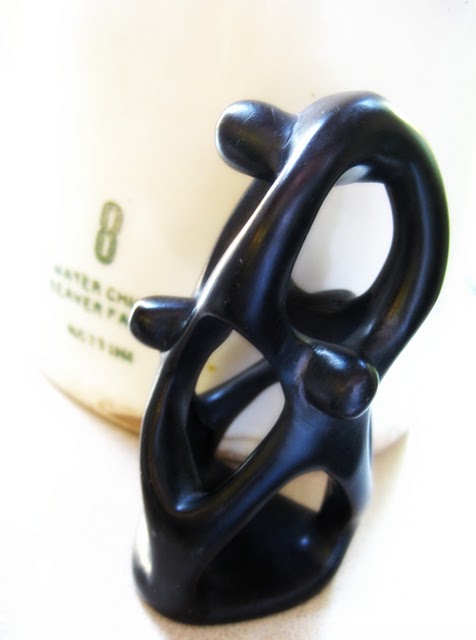
the turn of a wheel
is form and function,
hub and spoke, forged for
worlds of work and reason.
the idea of a wheel
is only form, spun from
hub and spoke, released
into worlds that need no reason.
A young salesgirl called me “honey” today. No one should call an elder woman with gray hair “honey.” Next time I won’t let it go. (See this.)
You can’t convince me that life (especially human life) on this planet is not on a downward spiral. The following disturbing news clips are from Harper’s Magazine Yearly Review.
Not only are we screwing with other lives on this planet….:
Exposure to antidepressants in the ocean was making shrimp suicidal, and female snails exposed to the chemical TBT were growing penises from their heads. A pair of swans stunned staff at a British wildfowl sanctuary by becoming only the second couple in 40 years to divorce. Seventy-five starlings fell from the sky in Somerset, England, and 10,000 birds were trapped in the twin beams of light projected up from the World Trade Center site, dazzled and unable to return to their migratory paths.
…we are screwing up our own:
A three-year-old girl in South Korea died of starvation while her parents played a child-rearing game online, a Kentucky man was charged with wanton endangerment after he got drunk and put his five-week-old son to bed in an oven, and a Georgia mother punished her 12-year-old son for his bad grades by forcing him to hammer to death his pet hamster. The body of a registered Japanese centenarian was found in her son’s backpack. A video surfaced of an Indonesian two-year-old smoking and propelling himself around on a toy truck because he is too out of shape to toddle.
And here in America, where it’s “don’t think, don’t care”:
“Not to be funny about it,” JPMorgan Chase CEO Jamie Dimon told the FCIC, “but my daughter asked me… ‘What’s the financial crisis,’ and I said, ‘Well, it’s something that happens every five to seven years.'”
The Texas State Board of Education voted to revise its social-studies curriculum, mandating that the U.S. government should not be called “democratic,”
A Texas newborn with a heart defect was denied health insurance because of his pre-existing condition.
There’s even more such frightening 2010 news bits at the above link to Harper’s.
And you think 2011 is going to be any better for the likes of us?
Under his white cassock, the good-looking young priest is wearing sneakers and jeans. I can see them peeking out from underneath the garment’s neat hem. The inside of the 110 year-old ornate church of my childhood is colder than this winter morning in the urban outside. The seat of the wooden pew is freezing my butt.
The church’s boiler has stopped working, and all through the service periodic clangings continue to irreverently punctuate the “words of the Lord.”
I am sitting in the exact spot in which I sat almost exactly a month ago. That was for my mother’s funeral service. This time it’s for my aunt’s (the wife of my father’s brother). They say that death comes in threes. I wonder if my 87 year-old aunt sitting to my left will be the third. I hope, instead, what will count is my dead desktop computer, which, at the moment is awaiting a possible resurrection on the repair desk of my most trusted geek. These are things over which I have no control.
I only go back to my home town for weddings and funerals, all of which include rituals celebrated in this spectacularly vaulted nave that is bordered by detailed mosaic depictions of the Stations of the Cross, above which large elaborate stained glass windows tell the rest of the story. The aesthetics of the church inspires awe, even without the faith that sustains it.
Neither my cousin nor I join in the line to receive Holy Communion. It has been decades since either one of us believed and practiced what we had been so carefully taught during our 13 years of Catholic schooling. When we sit around the table hours after her mother’s burial, my cousin and I and dredge up shared memories of some of our more innocent times — the May processions in which we tossed rose petals as we walked down the aisle (“one, two, three, this is for you, Baby Jesus…”) My mind slips away to the less innocent scenes from the movie “The Polish Wedding.”
We spend hours sitting around that table — my cousin and I and our remaining paternal aunt and uncle — sharing family stories and attitudes that had somehow eluded me during the 17 years I lived in the bosom of a clan that had, apparently, quickly separated into two camps — the “laws” and the “in-laws,” although which was which depended on whose perspective one adopted.
The story that surprises me most is one associated with the version my mother told of a seminal event in my life about which I once wrote a poem. In my mother’s version, her mother saved my young life; in the “in-law” version, my other grandmother believed that my mother was withholding medical treatment for me in favor of “leeches.” I see now that it became a stand-off between two matriarchs, and family relationships through the generations suffered as a result.
While it was my mother’s side of the family that I came to know best, it was an aunt on my father’s side who most impressed me, even though I only knew her for a very short while in my pre-teens.
Eleanor married my Uncle John, to the chagrin of my paternal grandmother. Eleanor was a free spirit, odd and artsy and strikingly beautiful. She had her kitchen ceiling painted red, she started to teach me how to sketch faces, and she sewed me a lavish ruffled robe that I wore until I could no longer button it across my chest. Suddenly (or so it seemed to me) she and my uncle were gone — moved out of state, out of touch.
And, in our post-funeral table conversation with my relatives from that side of the family, I learn just how strict my paternal grandmother was, refusing to accept her non-conformist daughter-in-law and leaving the couple with little alternative but to create a life for themselves apart from family expectations. I begin to understand the difficulties that my mother had in fulfilling her daughter-in-law role.
Eleanor and John had children — five, I think. I have never met them or been in touch with them. My cousin has but lost track of their lives long ago.
We have been a family burdened with expectations, and both my cousin and I acknowledge (with some private pride) that we opted not to meet a select number of them.
We are the matriarchs, now — much different in attitudes and expectations from our foremothers.
At least we hope so.
This is my response to Magpie Tales’ visual writing prompt #42. You can find the responses of others by going here.
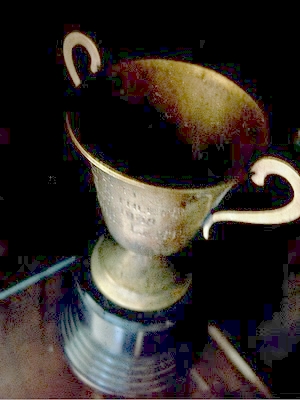
The Chalice of Pain
Pain. We all feel pain. We all would rather not feel pain, and those in pain usually can let you know where it hurts and how badly it hurts.
Except if they have dementia.
There is a false assumption that those with dementia don’t feel pain because they often can’t articulate that fact in ways that are obvious — especially with words.
From “Pain and Dementia,” referenced above:
Over time your family member may lose the ability to speak or may not make sense when they do. Therefore, it is very important to be able to recognize behaviours or actions that indicate pain. Some of these pain-related behaviours include the following:
* frowning, grimacing, crying
* swearing, moaning, calling out, noisy breathing
* fidgeting, pacing, rigid posture
* guarding an area of their body, not wanting to move
* hitting or striking out
* withdrawing or resisting when someone is helping with personal care
* refusing food
* change in appetite, rest periods, or sleep patterns
* increased confusion, crankiness, or distress
From “Behavioural Changes”:
* Sudden changes in behaviour are important to recognize as these are often the only clue that an older person is sick, getting worse in their dementia, becoming depressed, or having a side effect from a new medication.
* Attention to your family member’s behavioural and psychological symptoms are key to improving and maintaining their quality of life.
A recent PBS Frontline program, “Facing Death,” documented the pain suffered by both family (emotional pain) and those dying from dementia and other illnesses (both emotional and physical pain.) You can watch the program at the above link. Also of great insight are the comments left by viewers.
From “What happens when elderly people die?”
…fewer than one in five people can have a peaceful end, since ‘dying is a messy business’ for which relatives are unprepared. He continues: ‘Too often, patients and their families cherish expectations that cannot be met, with the result that death is made all the more difficult by frustration and disappointment with a medical community that may be able to do no better.’
Relatives who expect aware deaths may become angry and turn their anger onto doctors and nurses when death takes other forms. Dying people often need psychosocial support, but the potential for introducing this occurs only when the dying phase is identified. This is not always possible in trajectories 2 and 3….. [2) long-term disability with periodic exacerbations and unpredictable timing of death that characterize dying with chronic organ or system failures (some cancers that respond to treatment and then relapse come into this category); (3) self-care deficits and a slowly dwindling course to death from dementia.]
After watching the Frontline program and hearing how the doctors explain the options to the families of dying patients, it seems to me that there needs to be more honesty from the medical profession about the dying process, its inevitability, and the benefits to the dying of making those patients as pain-free as possible.
Maybe, because I grew up above a funeral parlor operated by my father, a funeral director – maybe, because I sat at my father’s bedside while it took days for him to die of cancer (his mind was alert and he chose to die at home with a certain amount of pain) – maybe because I survived the excruciating pain of a breech birth and thought I had died and now I’m not afraid to die – I feel strongly that, when death is close at hand, it should be welcomed as a relief from pain and that pain (for example, of old organs failing, of agitated dementia) should be aided by pain-relief medication.
On my bookshelf is “Final Exit,” which I bought a long time ago out of curiosity about peaceful “self-deliverance” when my time comes, especially if that time comes riddled with pain.
But it becomes a lot more complicated if a form of dementia has stolen my ability to communicate my pain and my wishes. My daughter knows that I’d rather die in peace than die in pain.
In the story of the Garden of Olives, even Jesus pleaded for the chalice of pain to be taken from him. No one wants pain, although we often are willing to bear with a certain amount of it if it’s going to get better. But the pain of dying does not get better.
Somehow we need to be educated about that fact so that we hold the best pain-free interests of our dying relatives in mind.
My mother’s name was really Bronislawa, which doesn’t have an English equivalent. So they called her Blanche.
Her dementia took over all of our lives for the past decade. Now that she is gone, my mind has cleared enough to remember her as she was before.
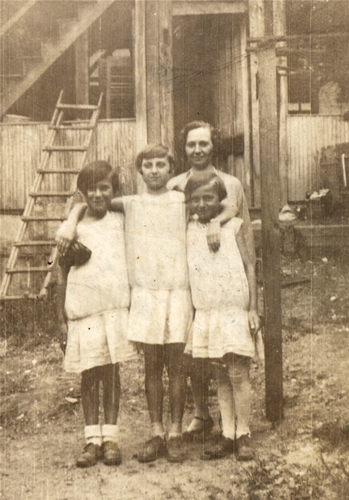
She was born in America but spent 8 years in Poland with her mother and siblings between the World Wars, when she was a pre-teen. Her father stayed behind to keep earning money, and the rest of the family went to live on the family farm in Poland. She was bi-lingual. She was the oldest of three sisters. She never graduated from high school. She had two brothers. None of her siblings is alive.
This is her and her mother and sisters when they returned from Poland to live in Yonkers.
At the age of 16, she went to work in the Alexander Smith and Sons carpet factory. Her family struggled financially, so they all had jobs. She often recalled that her father had to wrap her arms with ace-type bandages because they would be so sore after a day of work. Until the day she died, she had an indentation in her right forefinger, which she said was caused by the thread she had to wind around her finger day after day.
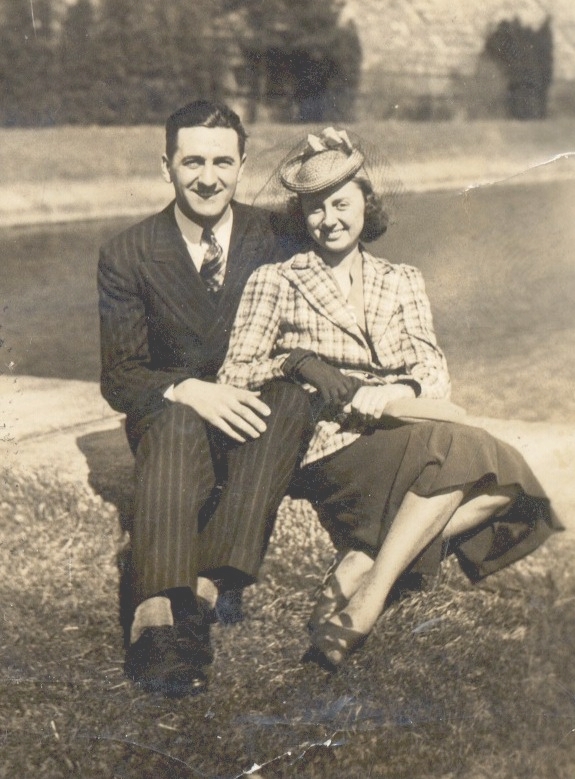
She was always slim and petite. And pretty. Not beautiful or striking. Pretty. He was handsome. “All the girls were after him,” she often said, “but he picked me.”
This is her and my dad when they got engaged.
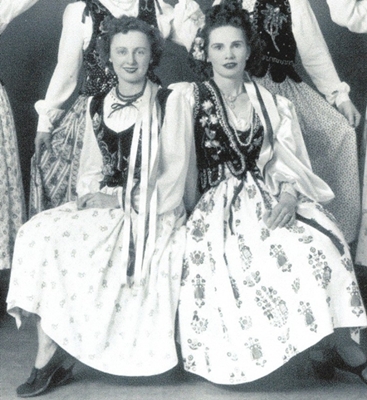
She also was a great social dancer and, of course, loved to polka. For many years she danced in a local Polish dance troupe. That’s her, on the left, and one of her best friends, who is still alive and who attended her funeral.
Even toward the end of her life, when she pretty much stopped speaking and walking, my mom would follow my lead in the fox trot and waltz if I held her close to me. She loved music. Loved to dance.
She also liked to sew. When I was a child, before every Christmas, all of my dolls would disappear for a day or two and then show up on Christmas Day all decked out in new dresses that my mother made for them. She liked her clothes to fit well, and she was always sewing them in, letting them out, hemming and correcting. I have that same tendency. She taught me to knit, crochet, and embroider, although she never really spent much time doing those things. Mostly, she was the full-time wife and mother and much-loved member of a group of Polish/American women who played Canasta once a week and socialized, family-style, other times.
I lost count of the visitors at her wake who said to me “She was a real lady.” Proper behavior and stylish clothes were important, and she bought the most fashionable shoes, which for many years had very pointy toes. She liked pumps and bought them narrow so that they would stay on her feet. Her toes suffered for that vanity, and when she got older, it was hard to find shoes that were comfortable.
She chose the suit and blouse that she wanted to be buried in more than a decade before the event — and with pearls around her neck and in her ears, she looked like a VIP, which, to many, she was.
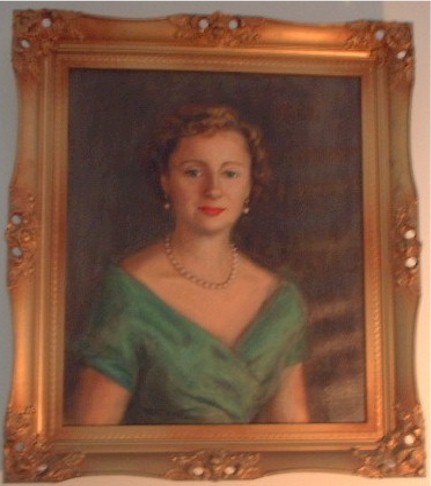
Her portrait, for which she posed to have painted in the 1950s at my father’s request, still hangs in my brother’s house.
“Where Have All the Liberals Gone?” asks this site and answers that they’ve renamed themselves “progressives” and are doomed.
I still call myself a “liberal,” and, if the televised Rally to Restore Sanity were any indication, there are a lot of concerned people like me out there (“CBS, which hired professional crowd-counters, put the number at 215,000“), despite the efforts of some to write the event off as mere “entertainment.” Every good teacher knows that education works best when it’s “entertaining” — as the MythBusters specifically demonstrated.
Liberals seem more likely to understand how real learning takes place, and even my 8 year old grandson got the message when he commented, as Ozzy and Yusef walked off the stage arm-in-arm: “Finally, they agree on something.”
I wonder how many of us liberals couldn’t make it to the rally but were watching on television. Lots of us, I’ll bet. Even though the event probably wound up teaching to the choir, it nevertheless, through technology, will stay out there in the internets for anyone curious enough and open enough to learn something new.
Meanwhile, we liberals will go out and vote tomorrow. We will teach our kids and grandkids by example and shared experience. Some, like my daughter, home school and share their successes with others. Some, like me, blog. Most of us just live our lives by the values we hold dear: tolerance, equality, free speech, peace, accountability, transparency AND most important, education: learning that takes place every day because we encourage curiosity, creativity, and active participation.
If it turns out that reactionaries win this election, we will still be out here, “teaching” our values in ways that are most effective and meaningful.